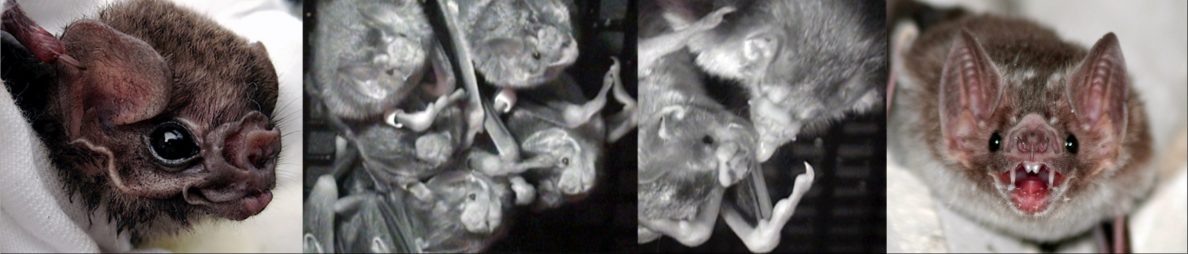
I was included on two massive collaborative papers (with almost 200 “co-authors”) published in Nature Ageing and Science. The first paper is about the further development of epigenetic clocks that work across mammals; these clocks are built from DNA methylation sites that are near genes linked to cancer, obesity, and lifespan; and humans that have faster versus slower epigenetic clocks are more likely to die sooner versus later. The second paper is about how DNA methylation patterns across 348 mammal species match evolutionary history, predict which species have longer life spans, and might help to explain why some species live longer than others. All I did for these studies was provide hard-to-get samples, but it was a great opportunity to learn more about epigenetic ageing. That topic is also the focus of a collaborative NIH project with Jerry Wilkinson on how ageing and immune function is linked to social stress and social integration in bats.
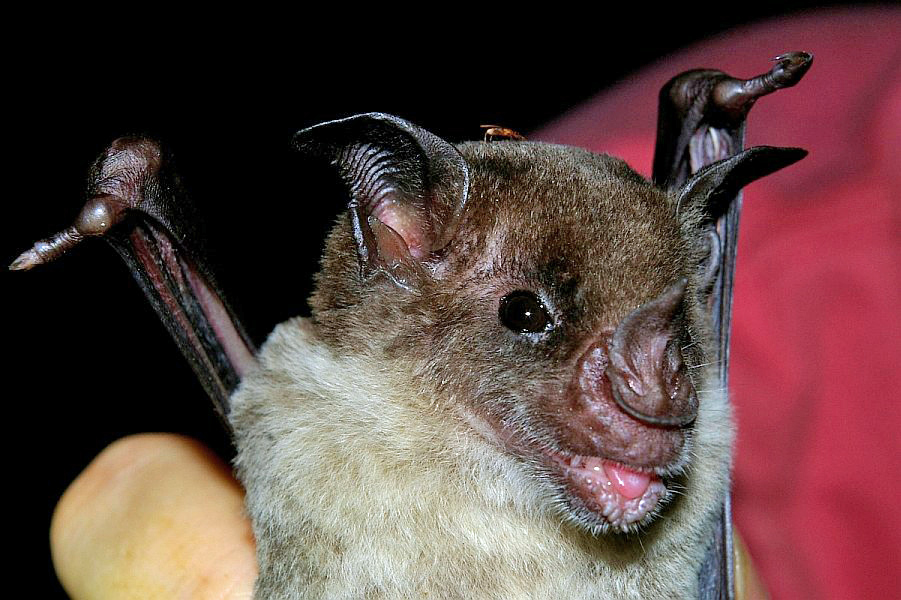
Another recent paper: About a year ago in Panama, my former postdoc Basti Stockmaier and my lab caught some Phyllostomus discolor (pale spear-nosed bats, left) to do a social network experiment. Apparently these bats had an a bacterial pathogen that was new to science, so we were included on a paper, from Dan Becker’s lab, describing these and other discoveries.
Next week: my lab will be attending the meeting of the North American Society for Bat Research.
This will get it’s own blogpost — but The Ohio Bat Festival is coming soon: Oct 29th.
Finally, I had a very fun interview on the Ohio Sci Podcast. We talked about the usual topics– vampire bats, cooperation, and social bonding in humans and other animals.

 Carter Lab