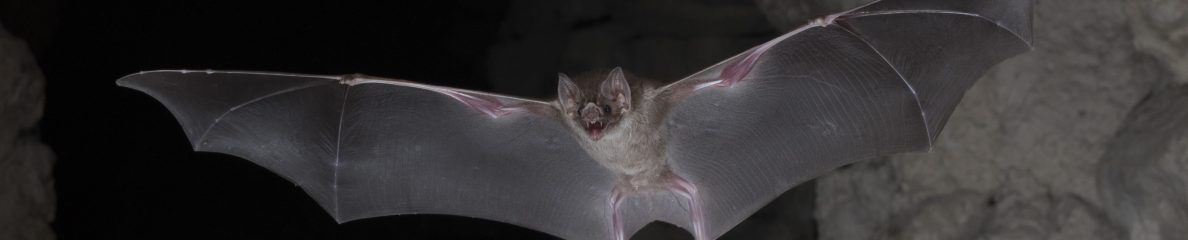
I just spoke with a geologist who was fed on by a vampire bat while she slept outside just down the street from where I live. She found the small but bloody bite on her toe in the morning. In many years, vampire bats were almost never caught near Gamboa, Panama (where I live now) … Continue reading Vampires 101: An interview about vampire bats
Vampire bats are exceptional social groomers
Undergraduate Lauren Leffer and I just published a paper in PLOS One entitled Social Grooming in Bats: Are Vampire Bats Exceptional? The answer, I think, is yes. Here's the story behind the paper. When you think of social grooming, you think of primates. Social grooming in primates has been viewed as a social glue that helps maintain … Continue reading Vampire bats are exceptional social groomers
Names of farmers and ranchers in Panama
I need names and addresses of farmers and ranchers in Panama that have seen vampire bat bites on their animals! If you or anyone you know has information, please email me or call me at 68293025 (Panama). The urgency is that I need a this list as soon as possible to meet a permit deadline. … Continue reading Names of farmers and ranchers in Panama
A suggested reading list
I just gave a talk on vampire bat cooperation, and someone asked me for a reading list to introduce them to the topics I talked about (cooperation, reciprocity, social bonds, etc). So here it is (real quick, no time to put links). I chose review papers wherever possible and only picked empirical studies with results … Continue reading A suggested reading list
How bats respond to distress calls: mobbing? Or predator inspection?
New paper came out on responses of a tropical free-tailed bat to distress calls. The title is Distress Calls of a Fast-Flying Bat (Molossus molossus) Provoke Inspection Flights but Not Cooperative Mobbing. Here's the story behind the paper. A year ago, I took a great field course on animal communication sponsored by a collaboration between German … Continue reading How bats respond to distress calls: mobbing? Or predator inspection?
Fixes to problems in science: 3 happening now, 3 unlikely to happen soon
I recently wrote about how both the incentive structures for academics and publishers can create problems for science. I posted it to twitter. I did not truly understand twitter until that day. Visits to the post grew exponentially up to >8,000 visitors (and yes I fit the curve: R-squared= 0.97). Yikes. That's not a big deal for … Continue reading Fixes to problems in science: 3 happening now, 3 unlikely to happen soon
Foraging vampire bats can expect big meals or none at all
About 7% of 340 adult vampire bats and 33% of 258 younger bats (<2 years of age) failed to feed on a given night. But when they do feed, wild vampire bats fill up like water balloons. Jon Flanders took this picture of a male vampire bat. He had originally caught this bat around the … Continue reading Foraging vampire bats can expect big meals or none at all
Talk today (Aug 31) at Cambridge
Talk: Cooperative food-sharing in the vampire bat Today! Monday August 31st @ 3 PM Location: Zoology Part II Lecture Theatre, Cambridge University, Downing Street, Cambridge, UK CB2 3EJ Map Thanks to Neeltje for organizing this talk.
Can friendships reduce the burden on family?
In an upcoming paper, I show that when a female bat feeds another bat, this allows her to add another possible donor to her own 'social safety net'. There's an obvious benefit to her: bats with larger sharing networks are more successful at getting fed. But there’s potentially a more subtle benefit. If a hungry bat … Continue reading Can friendships reduce the burden on family?
Goals of science vs Goals of scientists (& a love letter to PLOS One)
This monster post has been sitting on my computer hard-drive for a few months (seriously). For awhile, I was too scared to publish it. What I've written below is based on a (very) informal talk I gave at a graduate student seminar series at University of Maryland. To get the gist, the slides for that talk … Continue reading Goals of science vs Goals of scientists (& a love letter to PLOS One)
 Carter Lab